











































The Benefits of applying EMI filters in the medical field
The recent health situation has made us even more aware of the extreme importance of the medical sector, of the tremendous efforts made by healthcare workers during this period and of their daily commitment to caring for the population.
This dynamic of caring for and supporting the population has also been made possible thanks to the use of adequate medical instrumentation, capable of supporting patient recovery; instrumentation that must be effective and efficient in fields where the possibility of error is reduced to a minimum. This is where EMI filters play a fundamental role.
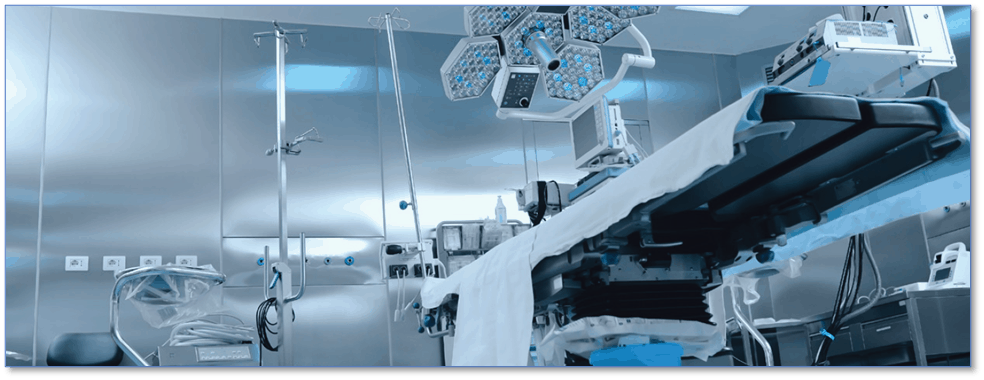
It is precisely in this context of technological reliability that ASTRODYNE TDI positions itself, along with its range of specific products, designed to maximize the performance required by medical device designers in full compliance with current regulations and to make the work of healthcare workers reliable and safe.
In particular, when developing medical electronic equipment, designers must consider all the possible sources of interference and ensure correct operation, such as leakage current, EMC issues and “operational continuity“.
In this article we will illustrate specifically how to solve EMC issues and which solutions are most suitable.
The problem of EMC disturbances in medical applications
Nowadays, all electrical and electronic devices use active circuits with a high switching frequency that create unwanted high-frequency signals and noise, generating Electro Magnetic Interference (EMI) towards nearby devices. The EMI generated can reduce the operability of other equipment, causing it to malfunction.
EMI FILTERS reduce noise and prevent interference with other devices. This makes EMI filters crucial for the correct operation of every product, especially in the electromedical sector.
Challenges in the use of EMI filters in medical applications
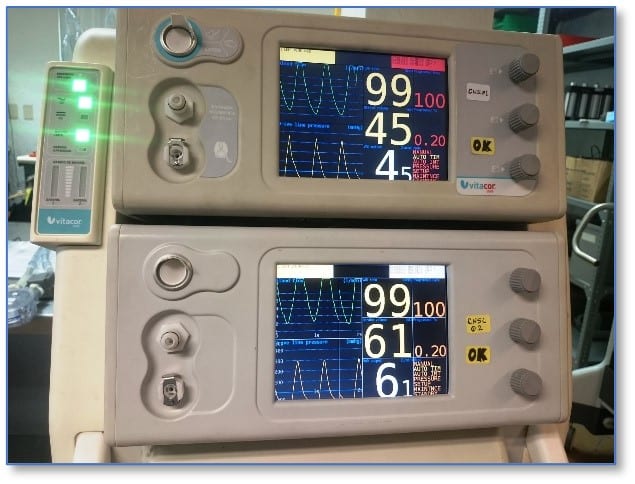
Life-support devices (e.g. defibrillators, ventilators, heart/lung machines…) operate in close proximity to the p
atient, are placed at minimal distances, and it is essential that they operate uninterruptedly. If a medical device were to stop working, the consequences for the patient would in fact be lethal. Furthermore, life-support equipment is often highly susceptible to interference; defibrillators and magnetic resonance imaging (MRI) are among the largest generators of electromagnetic interference but are also extremely sensitive to external disturbances.
It is no coincidence that global standards such as IEC 60601-1, UL 60601-1 and CISPR 11 reduce issues related to electromagnetic interference, setting guidelines and technical conditions so that products do not pose any danger to patient health.
Using properly designed EMI FILTERS minimizes medical device malfunction and reduces potential risks to patients.
Specific requirements of EMI filters for medical applications
To meet regulatory requirements, equipment must be able to attenuate noise signals while maintaining low leakage current.
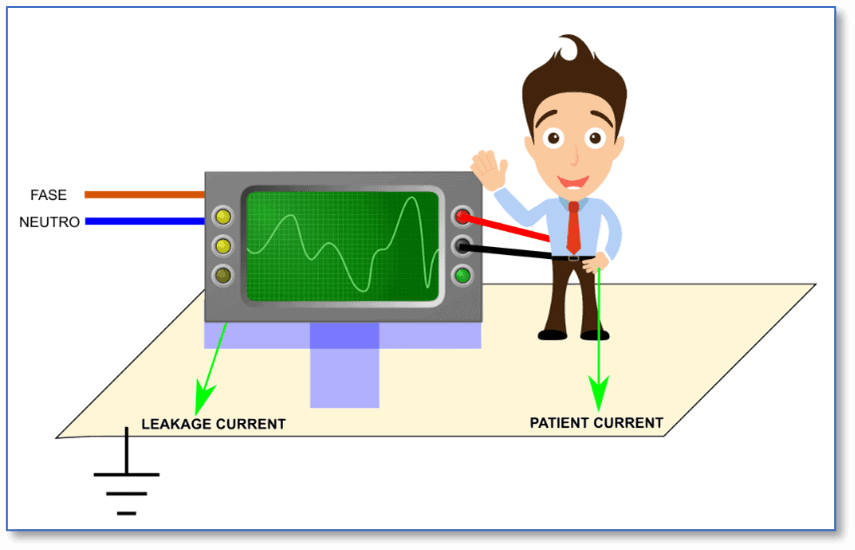
Leakage current, very common in electrical and electronic devices, usually flows to ground through the ground conductor. Some leakage current passes through the metal structure of the devices, creating an electrical charge (touch current). Electromedical devices are very often connected to patients, and some of these connections are electrically conductive and create a potential path for leakage current to reach the patient’s body (patient leakage).
A high leakage current flowing into the human body can create an electric shock. If the medical device is connected to the patient intravenously or through the heart, this current can induce ventricular fibrillation, potentially fatal. This is due to high patient leakage current or the inadvertent passage of ground/touch current through the patient, perhaps due to errors, contact, breakage or improper grounding connection. All of this can create short- and long-term health problems for the patient.
IEC 60601-1 Standard
The International Electrotechnical Commission (IEC) has standardized the IEC 60601 standard. Medical devices must comply with these regulatory requirements before being placed on the market. The standard provides for tests on emissions (CISPR 11), immunity and safety. In summary, the standard requires that the emissions generated by devices do not endanger human life or other devices.
EMI filters do not need to comply with IEC 60601 requirements, but they allow the medical device to comply with emission requirements, keeping disturbances within the limits imposed by CISPR 11.
Y Capacitors between Phase and Ground
As indicated above, leakage current is the critical safety parameter in medical applications. Leakage current is created through the Y capacitors connected between Phase and Ground (direct current) and by various insulation and dielectrics in the device (stray current). Medical regulations limit total leakage current differently for different applications as follows.
- Patient Device CF: floating connection to the heart / intracardiac conductive connection
- Patient Device BF: floating connection to the body / conductive connection to the body
- Patient Device B: connection to the body / non-conductive connection to the body
In type B, the parts applied to the body may be grounded, while types BF and CF must be floating and must maintain separation from ground.
Here are the leakage current limits:
| Current type | Type CF | Type BF | Type B |
| Patient current | 10 µA | 100 µA | 100 µA |
| Enclosure current | 100 µA | 100 µA | 100 µA |
| Ground current | 500 µA | 500 µA | 500 µA |
Considering that within a medical device there are many unavoidable sources of leakage current, the current budget available for the filter is close to zero, which translates into the absence of Y capacitors. Y capacitors between Phase and Ground are a fundamental component for every type of filter: the greater the capacitance, the better the filtering response, however resulting in higher leakage current.
All of this creates a unique challenge for medical EMI filter designers. If the capacitance value of the Y capacitors is reduced to comply with regulatory requirements, the filter’s performance is reduced accordingly and in many cases this could lead to the final device failing emission tests.
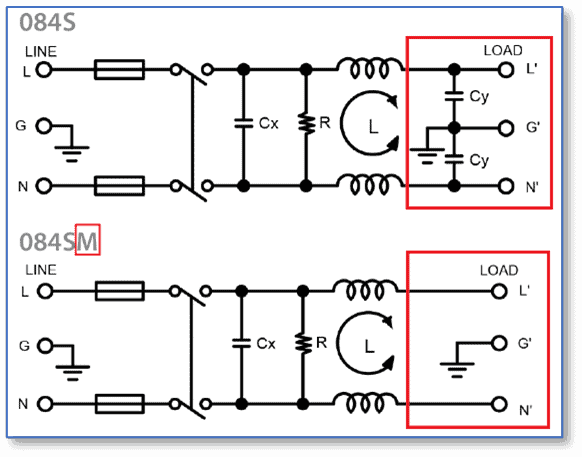
To solve this problem, it is necessary to optimize the value of the Y capacitors, also working on other components to customize the design. It is therefore essential to be able to choose the Y capacitance specifically for your project (0 / 0.1nF / 0.22nF/ 0.33nF / 0.47nF / 0.68nF / 1.0nF etc.) to achieve a perfect balance between filtering performance and low leakage current.
The diagram shown above illustrates the difference between a standard filter (for example the LCR 084S series, snap-in filtered socket) and its medical version (084SM): in the red area you can see the absence of Y capacitors in the Medical model.
The solutions offered by CONSYSTEM and ASTRODYNE TDI
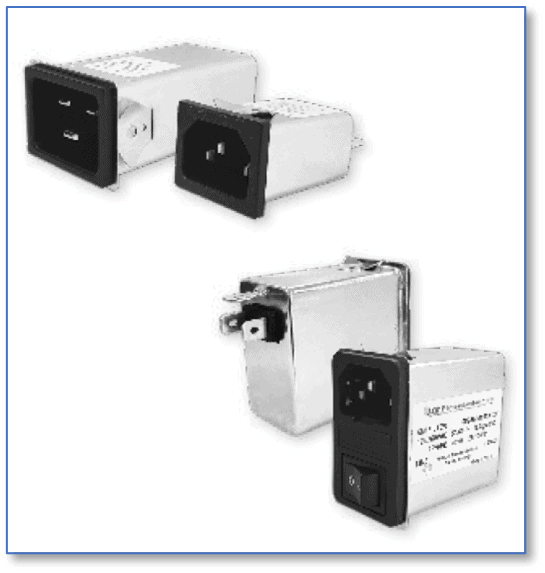
CONSYSTEM and Astrodyne offer a wide off-the-shelf range of medical EMI filters, all certified with different Y capacitance values between Phase and Ground to meet regulatory requirements for low leakage current.
Medical applications include diagnostic instruments, surgical beds, MRI and X-RAY machines, ventilators, O2 concentrators, blood circulation pumps and more.
The product range includes ready-to-use solutions as well as the possibility of creating tailor-made custom solutions, through close collaboration between designers and the 3 research centers, where it is possible to test the OEM device and verify the filter’s performance. ASTRODYNE TDI laboratories are recognized by UL, CSA and European bodies, allowing for a fast approval process for custom solutions.
Key points of the collaboration with ASTRODYNE TDI and CONSYSTEM:
- Free pre-compliance testing
- Free samples
- Fast response from designers
- Ability to create custom solutions
- Ability to select different Y capacitance values
CLICK HERE AND DISCOVER THE ASTRODYNE SOLUTIONS
Article published in May 2021 on ELETTRONICA AV