









































RADAR sensors serving smart mobility: high-tech-value solutions for road monitoring and beyond.
Traffic monitoring and management systems have become increasingly important in recent years to improve quality of life and reduce pollution in cities. Thanks to real-time traffic monitoring, it is possible to control the flow of vehicles and pedestrians at the city’s critical points, streamlining traffic and improving road safety and the efficiency of transport (public and private), as well as better monitoring of infrastructure and smart parking solutions. This type of solution enables cities to become more efficient and sustainable. Let’s now look at how radar technology can contribute to improving these systems.RADAR systems and sensors for road mobility and traffic monitoring: constant technological evolution from the post-war period to today thanks to unique technical characteristics

Traffic statistics and analysis
Traffic management is increasingly relying on technological systems that provide real-time information on traffic conditions.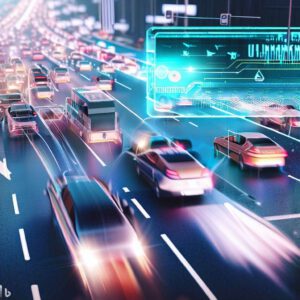 This allows for more advanced and flexible traffic management. RADAR sensors and modules are ideal solutions for these tasks; in fact RADAR sensors detect vehicles, providing information on speed, direction of movement and distance from other vehicles.
All information and data essential for a correct understanding of traffic flow and volumes.
For example, a radar can detect whether a certain lane is heavily used, the average speed of road users, peak traffic hours, the frequency of traffic jams, etc. This information can be considered, for example, to plan roadworks, detours, changes or new infrastructure projects. But also to assess CO2 emissions.
Depending on the monitoring objective, sensors can focus on multiple lanes simultaneously, single lanes, sections of road or entire intersections.
Another possible detection is vehicle counting: for example, the radar sensor can be integrated into the sign at a motorway junction to count vehicles entering the motorway.
This allows for more advanced and flexible traffic management. RADAR sensors and modules are ideal solutions for these tasks; in fact RADAR sensors detect vehicles, providing information on speed, direction of movement and distance from other vehicles.
All information and data essential for a correct understanding of traffic flow and volumes.
For example, a radar can detect whether a certain lane is heavily used, the average speed of road users, peak traffic hours, the frequency of traffic jams, etc. This information can be considered, for example, to plan roadworks, detours, changes or new infrastructure projects. But also to assess CO2 emissions.
Depending on the monitoring objective, sensors can focus on multiple lanes simultaneously, single lanes, sections of road or entire intersections.
Another possible detection is vehicle counting: for example, the radar sensor can be integrated into the sign at a motorway junction to count vehicles entering the motorway.
Traffic light control
Various technologies can be used to control traffic lights. The goal is to reduce waiting time at red lights and promote traffic flow with green waves. A common system is inductive loops, which however require a lot of road surface maintenance (since they are installed under the road). An alternative is radar units on traffic light poles, which recognize vehicles, their direction, speed and distance. This makes it possible to estimate when vehicles and cars will arrive at the traffic light and adjust the lights accordingly. Radars also measure queue length and user behavior at intersections. In some cases, the lights automatically adapt to traffic in real timeFeatured Products
All Products
Featured
VCCM600
Brand
Vox Power
Smart lighting
Street lighting capable of reducing light pollution and saving energy. Cities and municipalities are adopting cutting-edge street lighting systems. These systems use motion sensors to automatically control lights based on need. Some classic examples are parking lots, large corporate sites or garages. The lights turn on only when a vehicle or person arrives. Another step forward is the dynamic lighting of road stretches or urban areas. Thanks to radar-based motion and speed detection, the farthest light reliably turns on, coordinated with the trajectory of a car or truck. When the vehicle leaves the detection area, the light turns off. Dynamic, demand-oriented outdoor lighting is an important automation technology for smart, environmentally friendly cities.Featured Products
All Products
Monitoring pedestrians at traffic light intersections
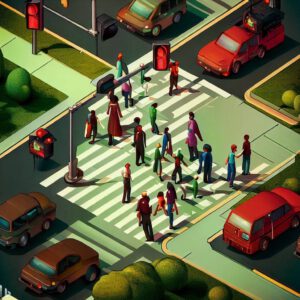 In addition to cars, trucks and the like, radar sensors can also detect the presence or movement of people. The technology is also used to identify vulnerable road users, such as pedestrians or cyclists.
At intersections, the sensors check whether there is a pedestrian waiting at the traffic light or still on the road. Pedestrians are also protected while crossing the road when a radar is installed. In fact, if there is still a person on the road, the traffic light will not turn green for vehicles because of the radar signal. If someone is waiting at a crossing, the sensor signal causes the pedestrian light to change sooner.
In addition, there is a contactless switch function on traffic light systems. Instead of touching or pressing a button, the pedestrian light can also be activated by detecting a hand gesture. These radar systems are installed in place of a contact switch and detect the presence of a hand or finger. This contactless control system offers users a significant advantage in terms of hygiene.
In addition to cars, trucks and the like, radar sensors can also detect the presence or movement of people. The technology is also used to identify vulnerable road users, such as pedestrians or cyclists.
At intersections, the sensors check whether there is a pedestrian waiting at the traffic light or still on the road. Pedestrians are also protected while crossing the road when a radar is installed. In fact, if there is still a person on the road, the traffic light will not turn green for vehicles because of the radar signal. If someone is waiting at a crossing, the sensor signal causes the pedestrian light to change sooner.
In addition, there is a contactless switch function on traffic light systems. Instead of touching or pressing a button, the pedestrian light can also be activated by detecting a hand gesture. These radar systems are installed in place of a contact switch and detect the presence of a hand or finger. This contactless control system offers users a significant advantage in terms of hygiene.
Featured Products
All Products
Access control in parking lots
Parking management also benefits from sensor technology, whose applicability in parking lots begins the moment the car enters. For example, the radar sensor sends the trigger to open a barrier when a vehicle enters a given monitoring area. RADAR motion sensors also provide data on the number of cars using the entrance. This information can be used to track available spaces. Radar sensors also provide information on the direction of vehicle movement. This way, drivers going the wrong way can be identified and warned. Another example is the use of contactless switches for ticket dispensing. Instead of having to manually and often awkwardly press the ticket button at the parking entrance, a brief hand gesture in front of the sensor is enough, thanks to the touchless detection sensor.Featured Products
All Products
Featured
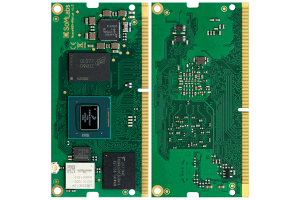
SOM – 8MPlus
Brand
SomLabs
Featured
AEF3000
Brand
Claf Power
Featured
Atex Fans
Brand
Delta
RADAR technology for detecting road violations
Now we come to the classic application of radar: traffic control systems that use radar technology to identify and penalize driver violations. A speed camera measures vehicle speed and takes a photo if a driver exceeds the speed limit. There are fixed or mobile systems. Another example is red-light cameras. Here, the radar measures vehicle speed and detects whether drivers continue or stop at the traffic light’s stop line. The system also detects unauthorized U-turns and drivers going the wrong way, and can transmit this information to impose a penalty for the violation.Featured Products
All Products
Featured
BEG1k0110G
Brand
Infypower
Featured
Atex Fans
Brand
Delta